Sourcing
We align available harvest with buyer requirements for variety, maturity, size range, and packing style.
Each step protects quality, reduces uncertainty, and keeps export preparation visible.
How shipments move
The best shipments are not improvised at the loading door. They are planned around buyer specs, crop condition, packing format, freight timing, and documents that match the destination.
We align available harvest with buyer requirements for variety, maturity, size range, and packing style.
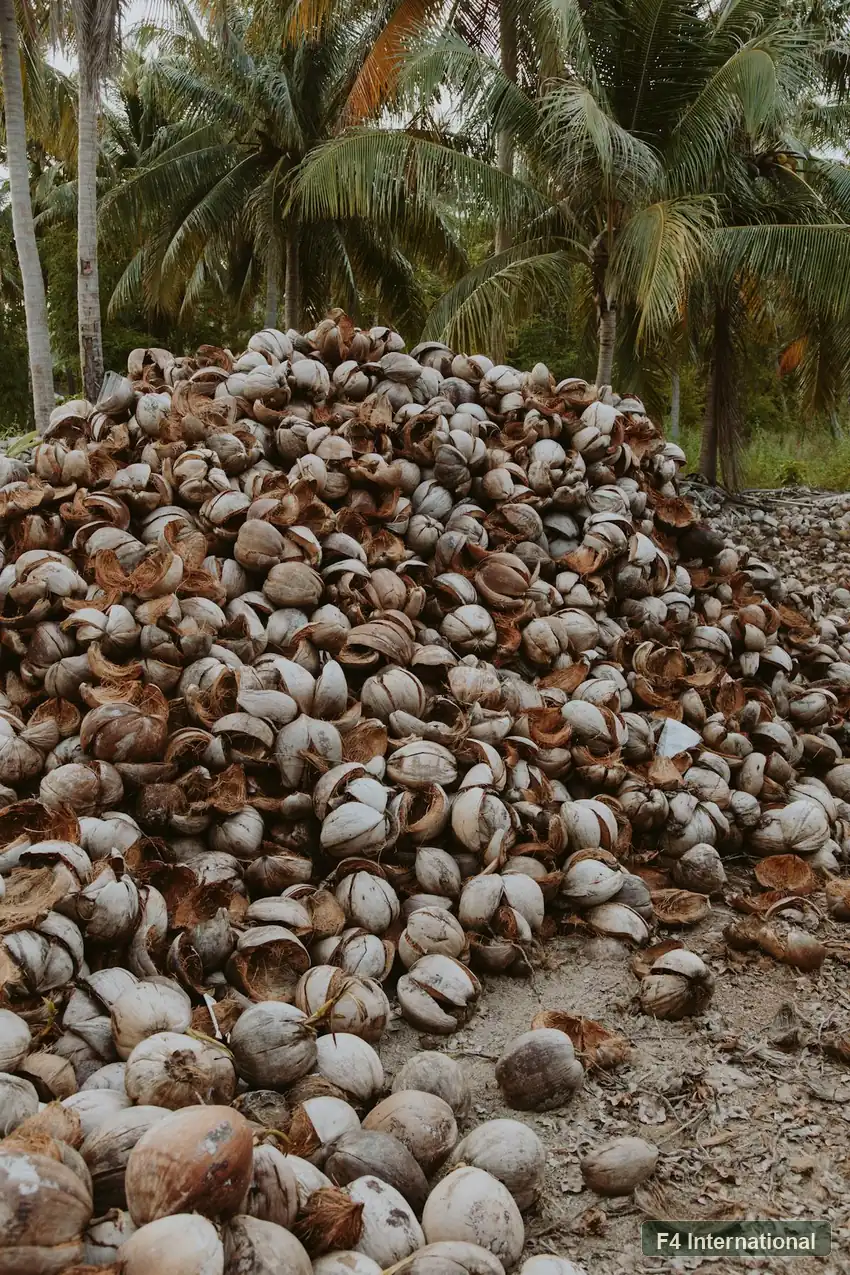
Coconuts are checked for maturity, cracks, surface condition, size consistency, and visible defects.
Husking level is prepared according to product type: semi-husked, de-husked, or unhusked.
Lots are packed into sacks, mesh, cartons, or buyer-specific formats with clear marking where needed.
Pre-dispatch checks confirm count, packing condition, shipment identity, and export readiness.
Documentation, container loading, and handover are coordinated so buyers receive a clean shipment trail.
Quality checkpoints
Semi-husked coconuts need a protective trim, de-husked coconuts need shell cleanliness, and unhusked coconuts need careful bulk handling. We keep these differences visible instead of forcing every order through the same lane.
Export documents
Commercial invoice, packing list, certificate support, fumigation coordination where required, container details, and buyer-specific marking can be organized alongside the shipment plan.